
The Long Ashton community pulling together for swifts

An update from the Long Ashton Swift project after a successful summer
We’re heartened to hear stories from all over the UK where local communities are coming together to help save swifts - one of Britain’s most extraordinary yet fastest-declining summer visitors. In fact, swifts have declined by 66% since 1995 and are now on the UK’s Red List for birds of high conservation concern.
However, across towns and villages, community-led swift groups are forming to promote awareness, install swift boxes, and encourage nature-friendly design in homes and developments.
The Long Ashton community has become part of this growing national effort - The Long Ashton Swift Project is a movement built on shared appreciation for these remarkable birds and a commitment to helping swifts thrive in a changing world. The past year has been one of spreading the word on swifts, identifying habitat hotspots in the village, and orchestrating the construction and installation of swift boxes. We’ve gathered a round-up of our progress this season, but first, a look at the picture beyond Long Ashton.
Bristol Swifts: our neighbouring project had a record year
Our neighbours at Bristol Swifts have had their most successful season yet: 46 eggs laid, 38 hatched, and 36 chicks fledged across 25 monitored swift boxes.
They’ve credited the warm weather and a strong local insect population in reducing chick mortality to just two, and remarkably, one of their pairs produced a second brood - a rare event for swifts. Their first arrivals came on the 25th April, and the last young fledged in early September, marking a long, fruitful season.
Meanwhile, the house martin colony at Sea Mills Station also grew, increasing from three broods in 2024 to five double broods in 2025 - potentially producing up to 50 chicks. These results underline how helping swifts and other aerial insect-eaters begins with habitat, food, and people working together.


National action: swifts beyond Long Ashton
Despite the Labour Government’s u-turn in May, the plight of swifts is back on the political radar. In Wales, the Senedd recently debated a petition signed by more than 10,000 people calling for swift bricks in all new builds. Conservation organisations, including RSPB Cymru and local swift groups, highlighted that swifts are now Wales’s fastest-declining bird and need urgent protection.
In another high-profile case, the team at Westminster Abbey are trying to provide a safe haven for migrating swifts. As a Unesco World Heritage Site, most buildings at the Abbey have Grade I or Grade II designations, however, swift boxes have been installed on one of the administrative buildings. The boxes have been sprayed red to blend with the historic buildings and recorded swift calls are being played to guide the swifts to the right areas.
We recently heard about recent housing development to the western side of Faringdon in Oxfordshire. Many of the new houses were built with nesting-hole bricks incorporated under their eves. Importantly, the site is ideally situated next to farmland with many acres of grazing meadows and grass leys with plenty of insects. Swifts, swallows and martins quickly moved in - it’s great to see them picking up despite the nation-wide decline.
Progress for the Long Ashton Swift Project
Closer to home, our summer of swift support was a success! Our Swift Walk & Talk event drew residents and visitors keen to learn more about swift behaviour, migration and ways of helping swifts locally. It’s always great to connect with like-minded people in the village.
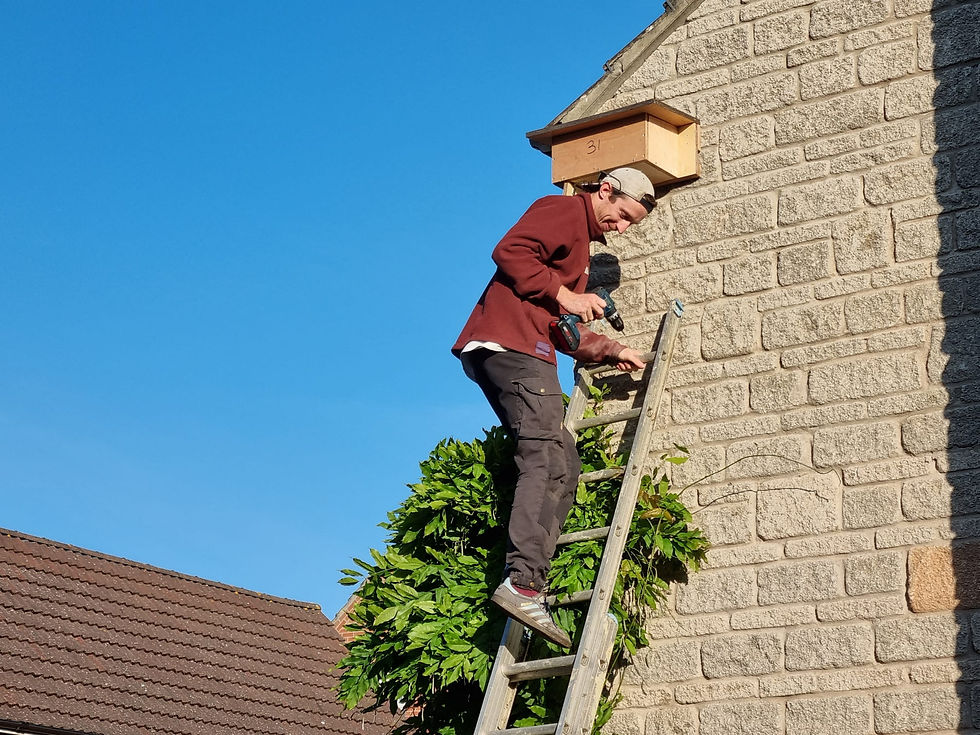
Thanks to craftsmanship from LANCE Trustee Owen, we built and installed 11 new swift boxes, specifically designed for houses without soffits and made to last through the weather. We also repositioned two existing boxes for better success. We’re especially grateful to Jack and Andy, who helped us mount the boxes safely in known swift hotspots around the village.

All Saints Church joined in the efforts too, installing four boxes in the belfry and playing swift call-back recordings throughout the summer to attract passing birds from Ashton Court and Ashton Vale.
One intrepid resident has retro-fitted swift bricks into his own home and reports that it was show swift-shaped interest this summer! We really have our fingers crossed that he gets a raft of breeding birds next year.
Altogether, we now have 48 swift boxes installed in the village, alongside several new natural nest sites discovered and recorded. We’ll be watching eagerly next spring for the return of our swifts, hoping they find good weather and plentiful food on their long journey home of course.
What can I do for swifts locally?
While providing swift boxes is essential, swifts also rely on a healthy supply of flying insects to feed their young. In turn, insects need varied, living landscapes: full of flowering plants, water, trees and long grass. Every over-tidy verge or close-mown lawn may look neat to us but, to wildlife, it’s often a desert.
By letting grass grow longer, leaving wild corners, and planting native shrubs and trees, we can boost insect life dramatically. Even small steps - such as reducing pesticides, leaving leaf litter, or adding pollinator-friendly flowers - will make a difference.
Older roofs and buildings often provided natural nest cavities for swifts, over time we’ve restored old buildings or replaced them with brand new. When renovating our homes, we can help by preserving small openings or including a swift brick, box or nest space. Together, these simple actions create a landscape rich in insects and safe for nesting: the very foundation swifts depend on.
Looking ahead to a swift recovery
From the success of Bristol Swifts, to political momentum in Wales, 2025 has shown that progress is possible. Here in Long Ashton, our community’s growing network of swift boxes and dedicated volunteers is proof that local action counts.
If more developments include swift bricks, and more households are open to swift boxes and gardening for insects, we can keep the joyful scream of swifts echoing over our rooftops for generations to come. Together, the Long Ashton community is helping swifts take flight and keep our skies alive each summer.


Comments