
An antidote to doom scrolling
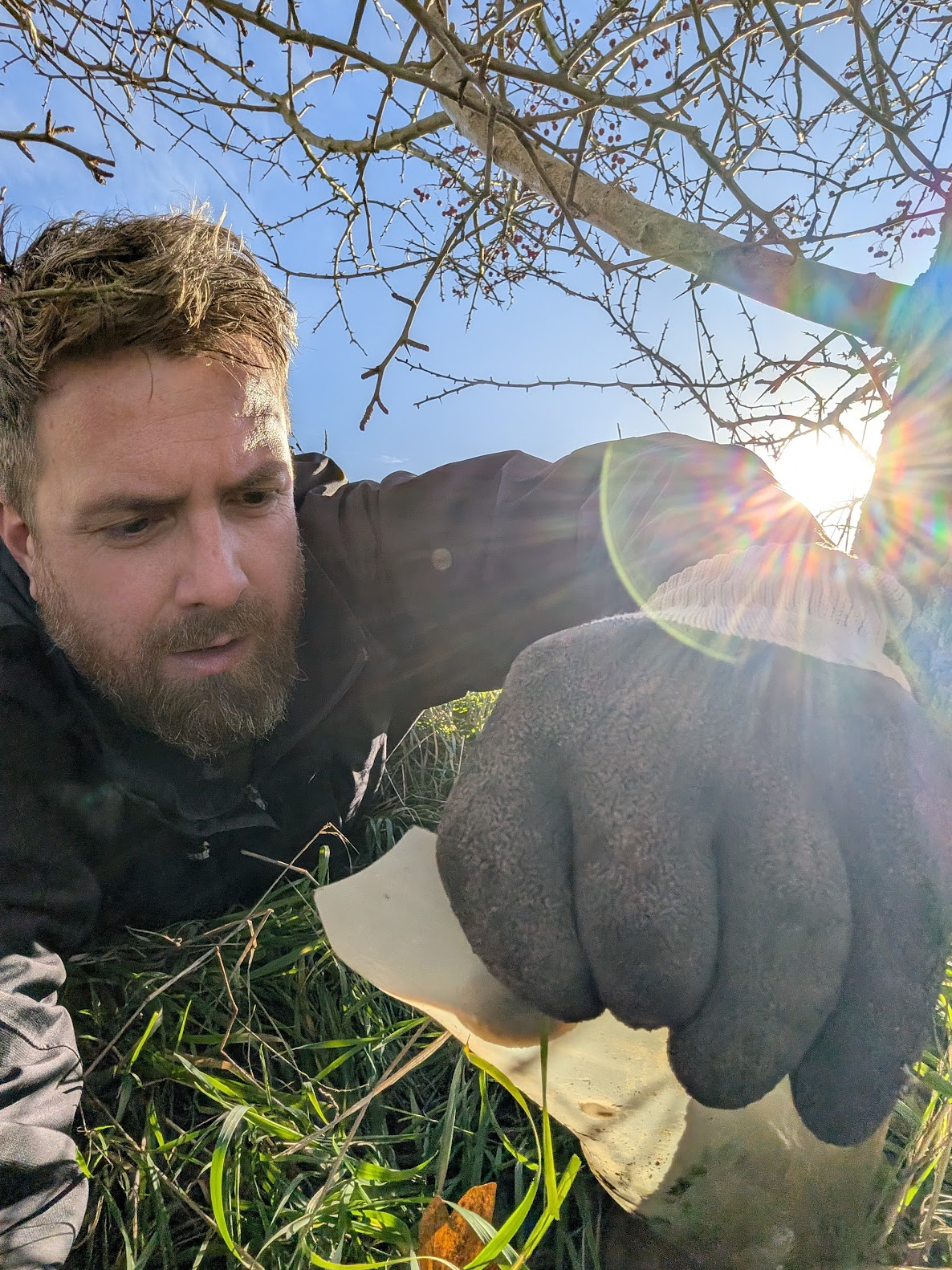
Paul Dennys volunteered to remove PVC tree guards and got stuck right in!

"When I found myself out of work, with my industry showing no signs of picking up, I fell into the familiar trap of doomscrolling job boards and LinkedIn, searching for any glimmer of hope. What I was really doing was spiralling into negativity. Constant refreshing and searching was proving a waste of time and a drain on my mental health, so I decided I needed to do something more practical and rewarding.
That’s when I approached the LANCE Trust.
Trustee Amanda immediately set me to task. The mission sounded simple enough: remove hundreds of spiral tree guards from a long hedgerow. In reality, this was a rapidly growing hedge packed with hawthorn and other spiky shrubs that seemed determined to stop me in my tracks or at least make the job as painful as possible.
My tactic was to keep my head down and crawl right into the heart of the thorny mess. Some guards peeled off with ease; others had become so intertwined in the branches that they reminded me of those unfortunate victims fused to the ship in the Alien films. A nerdy reference, but it feels accurate!
Why do trees need guarding?
"With a bit of brute force and resilience, the plastic guards soon started to pile up. As I worked, I found myself wondering why these things are used in the first place and why removing them matters. The guards are there to protect young saplings from being eaten by deer and rabbits before they have a chance to mature. You might ask why trees need plastic barriers to grow when they don't in the wild. Well, because we’ve removed natural predators, hungry herbivores can spend all their time eating saplings without fear of becoming dinner themselves.
So the guards do serve a purpose, but they also come with big drawbacks. Once a tree is established they should be removed; otherwise they can restrict growth and eventually become embedded in the trunk. Too often this doesn’t happen, sometimes because the hedge becomes too dense to reach them, sometimes simply because there aren’t the resources or will to go back and collect them. Left in place, the plastic can take hundreds of years to break down, eventually turning into microplastics that pollute the soil and cause untold damage. So my thorn-filled task felt like a pretty righteous mission!
It felt good to be contributing to the community, especially in a way that helps protect the greenbelt around Long Ashton, an invaluable part of the village and one that will always be under pressure. Being outside quickly pulled my mind away from the endless scrolling, and spending time surrounded by nature is only ever a good thing for me.
Wild neighbours
"The hedgerow I was working to rid of plastic was alive with activity. Flocks of chippy little long-tailed tits (left) would burst onto the scene, making a racket as they rampaged around the shrubs like a mini gang. They are undoubtedly one of the cutest of our feathered friends and up there with my favourites. Goldcrests (centre), with their brilliant yellow mohawks, also made the occasional appearance. Seeing our smallest bird species, weighing little more than a teaspoon of salt, always gives me a buzz.
Underrated hedgerow habitat
"Watching the hedge teeming with life reinforced my view that hedgerows are a vital habitat. When you look across our patchwork countryside, you see plenty of lush green fields but often not much within them, apart from the hedgerows that crisscross their borders and boundaries.
After a little digging, I discovered they are the UK’s most widespread semi-natural habitat. They lock up around 13 million tonnes of carbon, help prevent flooding, and provide food and shelter for a huge range of species, from birds to insects.
So if you ever find yourself stuck in a doomscrolling loop, I can highly recommend swapping the screen for some fresh air and a pair of gloves. Come and volunteer with the LANCE Trust, and you even get to enjoy a coffee with a view."
The LANCE Trust takes its environmental responsibilities very seriously, so one of our Trustees researched the feasibility of recycling these worn-out PVC spirals. Luckily, there is a scheme to which all these will be sent. It's somewhat costly but the Trust believes its the most responsible course of action. More information can be found here.
How to get involved
We're building a list of anyone who is keen to join in with more collecting in spring 2026. The best thing to do is to follow us on any of these channels:
In the meantime, if you’re out and about anywhere in the country and spot this problematic plastic you can support a programme called Plot That Plastic which aims to build a data set of where plastic tree guards are located.


Comments